Free Live Events
Ages 14+. Led by Shawn Lynch. Built for parents who refuse to leave their kid's future to chance.
You've Done Everything Right. So Why Does It Feel Like Your Teen Is Drifting?
Success Academy is a 3-month mentorship that gives your teen what school can't — real-world skills, a success-oriented community, and a financial head start.
📅 Tuesday, April 1st 🕖 7:30 PM EST📍 Live (link will be sent to your email)
There's a Window Most Parents Don't Know About. And It's Closing.
Here's what developmental psychology actually tells us about how kids are shaped.


Ages 0-7
The Emotional Stage.
This is where kids learn from their parents. How to love. How to trust. How to feel safe. You probably crushed this part. You read the books. You showed up. You gave them a foundation.
Ages 7-12
The Transition.
Peers start to matter. Your voice gets quieter. Theirs gets louder. You notice it but it still feels manageable.
Ages 12-18
The Social Stage.
This is where it gets real. Group dynamics take over. Who they hang around determines who they become. Not your lectures. Not your values talks. Not the school they attend.
Their environment.
The kid sitting next to them in class. The group chat they're in at midnight. The five people they spend the most time with.
Ages 18-25
The Financial Stage.
This is where the skills gap shows up. The ones who had the right environment are building. The ones who didn't are lost — moving back home, cycling through dead-end jobs, wondering what happened.
Here's the part that stings.
Most parents did great at the emotional stage. You gave them love. Stability. A good home.
But nobody gave you a playbook for the social stage.
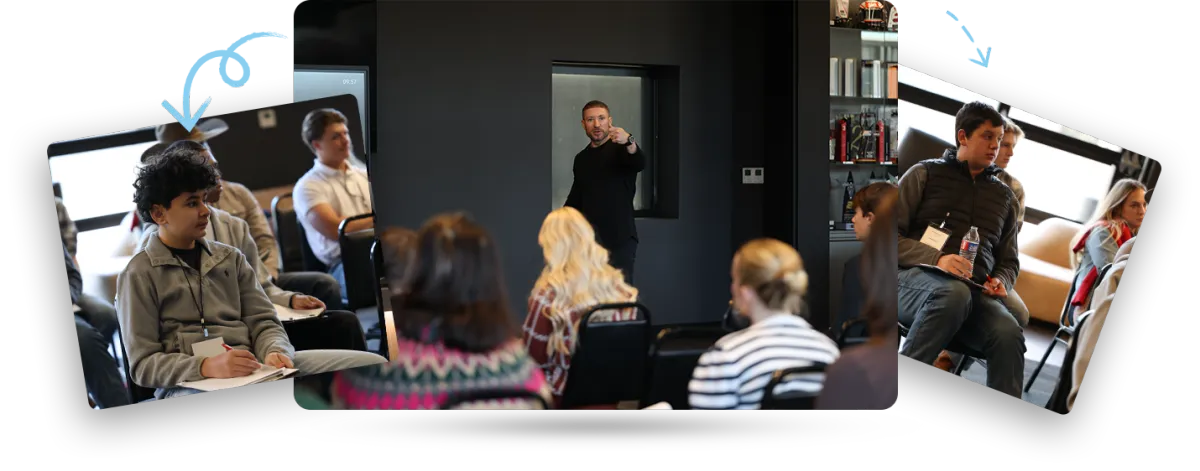
Ages 12-18. The years where environment matters more than anything you say.
And it's not your fault.
There's no class for this. No book that actually covers it. No system designed to help parents shape their teen's environment during the exact years it matters most.
Think about how small it starts.
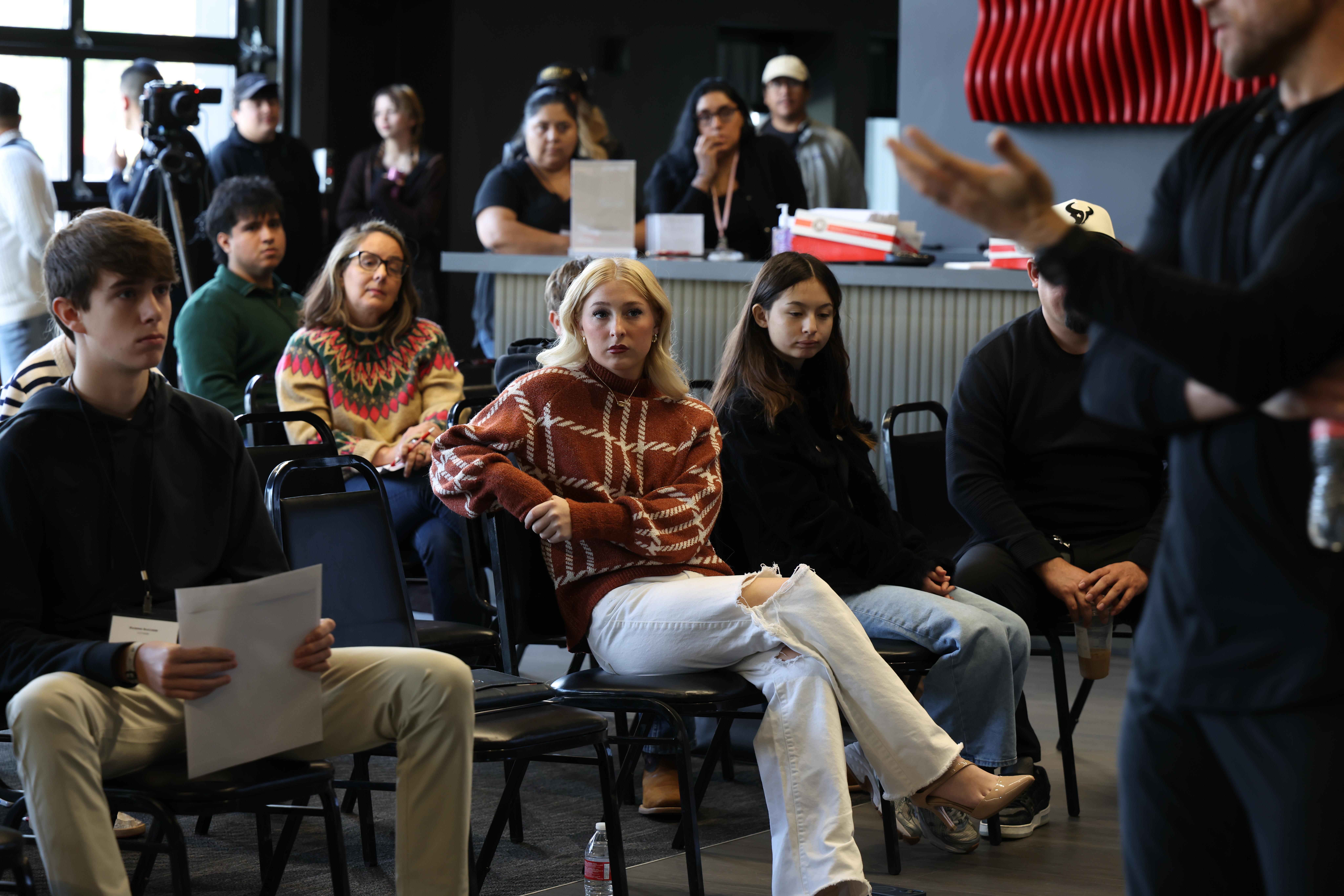
A good kid hangs out with a different crowd one summer. Nothing dramatic. Just kids who are bored.
Kids who don't have direction. Kids who think ambition is weird.
Six months later, your teen's grades slip. Not a lot. Just enough to notice.
A year later, they've stopped talking about what they want to be. They shrug when you ask about the future. They're not in trouble — they're just... flat.
Two years later, they graduate. No plan. No skills. No network. No fire.
That's not a character problem. That's an environment problem.
It works the other direction too. Put that same kid in a room full of teens who are building things, learning from mentors, competing in a healthy way — and watch what happens.
They come alive.
Not because someone fixed them. Because someone changed the room.
Meet Your Mentor
I'm Not a Parenting Expert.
I'm Someone Who Lived What Happens When a Kid Doesn't Have the Right Environment.
I grew up in a small town. About 5,500 people.
Not a bad place.
Not a broken home.
Just... small.
My whole world was defined by what I could see around me. And I couldn't see very far.
No mentors.
No wealthy people.
No one who'd built anything I could point to and say, "I want that." I knew from a young age that I wanted more — but I didn't know what I didn't know.
And when you don't know what you don't know, you can't even ask the right questions.
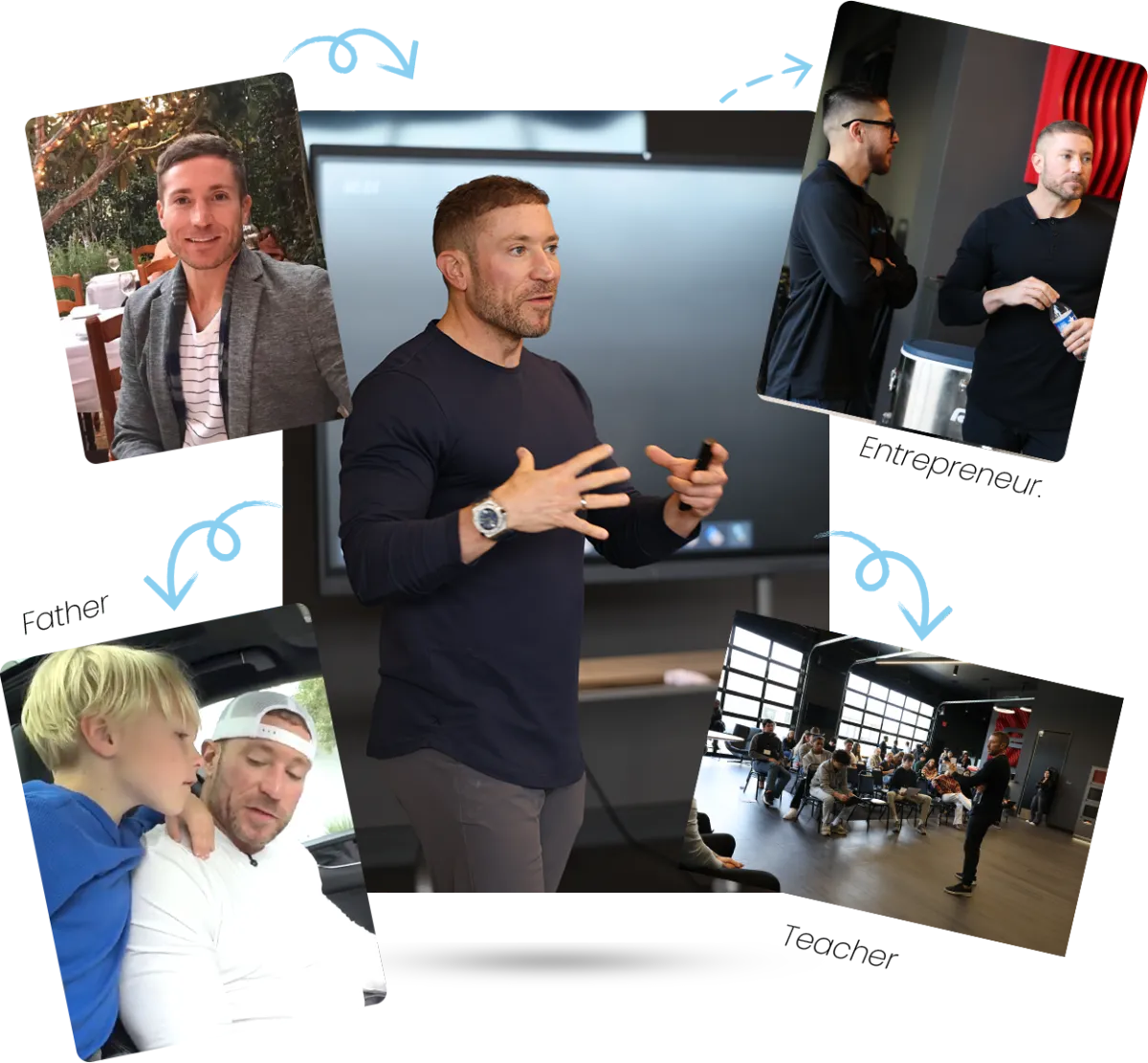
Then my dad passed away. I was 18.
And nobody teaches you what to do when life hits you like that.
I didn't handle it well.
I was lost. Angry at the world. I fell into partying, drinking, fighting — surrounded myself with the wrong people because they were the only people who seemed to understand what I was feeling.
Or at least they didn't ask me to explain it.
I wasn't a bad kid. I wasn't broken. I wasn't lacking character or discipline or intelligence.
I just had no one showing me a different path.
No mentors.
No guidance.
No access to anything beyond what that small town offered.
In my early 20s, I started trying to build something. And I made mistake after mistake after mistake. Because school doesn't teach you the things that actually matter — mindset, money, communication, discipline, accountability.
When you graduate at 18, you're starting from zero on the stuff that determines whether you make it or not.
The turning point wasn't a lecture. Wasn't a book. Wasn't someone telling me to "make better choices."
It was access.
Access to the right people. The right environment. The right conversations. I got around people who were building real things. People who thought bigger.
People who expected more from themselves — and by extension, expected more from me.
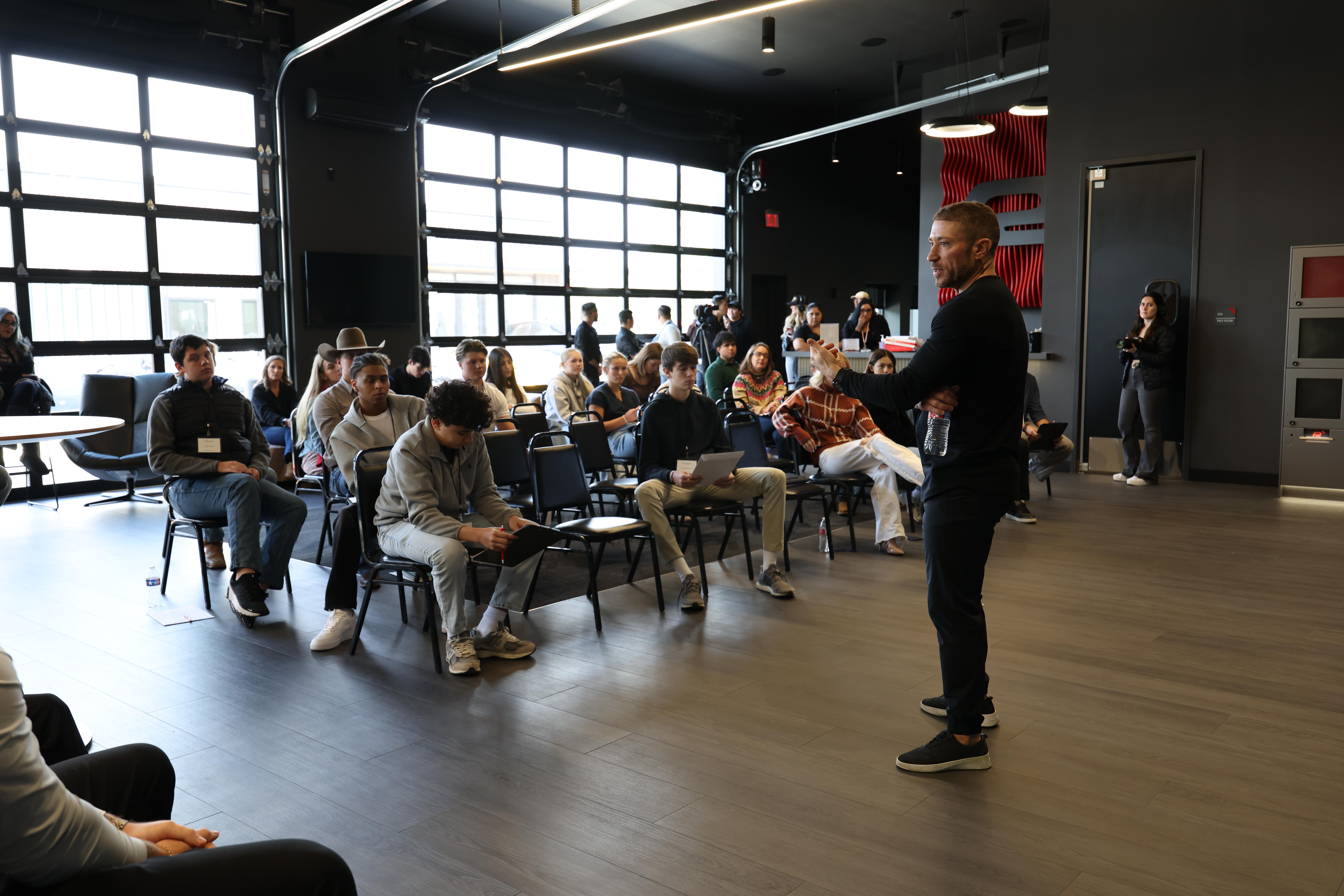
And something clicked.
Not overnight. Not in some Hollywood moment. But slowly — then all at once.
I've spent the last 25 years learning through failure, pain, and experience.
Today I run businesses generating over $150 million a year and hold a real estate portfolio worth over $80 million. Not because I had a perfect path. Because I learned what works by failing when no one was watching.
But here's what I think about most:
What if someone had given me that access at 14 instead of 24?
What if I'd had a mentor at 15 who showed me what was possible?
What if — instead of figuring it all out alone in a small town with no connections — I'd been in a room full of ambitious kids building things, with someone who'd actually done it showing us the way?
I'd have a 10-year head start. Minimum.
That's why I built Success Academy.
Not because I've got parenting figured out. I don't.
Because I know — from living it — what happens when a kid doesn't have access to the right environment. And I built the thing I wish someone had built for me.
The Framework
The 3-Step Framework Behind Success Academy
Most programs for teens sell content. Watch this course. Read this module. Fill out this worksheet.
What if I'd had a mentor at 15 who showed me what was possible?
What if — instead of figuring it all out alone in a small town with no connections — I'd been in a room full of ambitious kids building things, with someone who'd actually done it showing us the way?
I'd have a 10-year head start. Minimum.
That's why I built Success Academy.
Not because I've got parenting figured out. I don't.
Because I know — from living it — what happens when a kid doesn't have access to the right environment. And I built the thing I wish someone had built for me.
Expose to Success
Your teen gets access to mentors, entrepreneurs, and peers who are building real things. Not theory. Not textbooks. Real people doing real work. When a 15-year-old watches a 22-year-old run a business — something shifts. It stops being abstract. It becomes "oh, I could actually do that.
Healthy Community
A curated group of teens who are ambitious, coachable, and building. Your teen is going to be shaped by their peer group whether you like it or not. So the question isn't "will peers influence my kid?" It's "which peers?" In Success Academy, the average of their five closest peers goes up. Way up."
Life Skills
Financial literacy. Communication. Entrepreneurship. Decision-making. Negotiation. The stuff school skips. The stuff that determines whether your kid thrives at 25 or moves back home.
What's Included
What Your Teen Gets Inside Success Academy
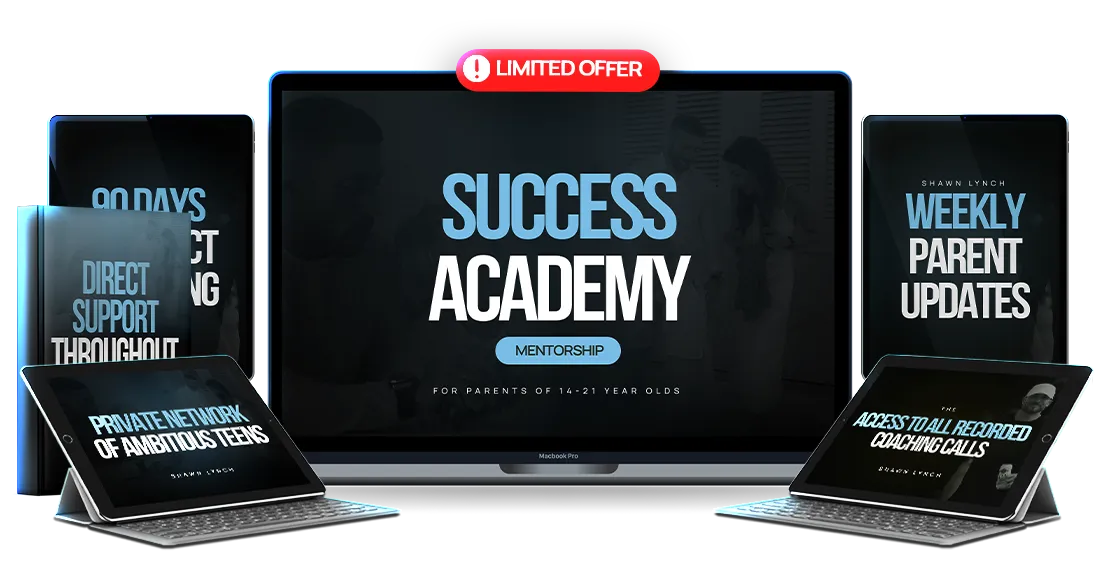
90 days of live coaching with Shawn Lynch — not pre-recorded modules, not AI chatbots, not some junior coach reading a script. Shawn. Live. Every week.
Private community of ambitious teens (ages 14+) — the peer group upgrade most parents would pay anything for.
Weekly parent updates — you'll know exactly what your teen is learning, how they're progressing, and what's shifting. No black box.
All sessions recorded — missed a week? No problem. Everything's captured so your teen never falls behind.
Direct support throughout the program — questions don't wait for the next session. Your teen gets help when they need it.
Real-world projects and challenges — not homework. Actual projects that build skills, confidence, and a portfolio of proof.
Frequently Asked Questions
Is my teen too young for this?
If they're 14 or older, they're in the window. Earlier is better. The social development stage (12-18) is when environment has the most impact. Starting at 14 gives your teen a 4-year runway before they leave home. Waiting until 18 means you've missed the window.
How much time does this take per week?
A few hours. Designed to fit alongside school, sports, and everything else. Sessions are live but recorded.
How is this different from online courses?
Courses give you content. Success Academy gives your teen a mentor, a community, and real-world experience. Content is everywhere. Environment is rare.
What does it cost?
Pricing and enrollment details are covered on the event. We want you to understand the full picture before we talk numbers.
What if my teen doesn't have a business idea?
Perfect. Most don't. Success Academy builds the foundation first — financial literacy, communication, decision-making, exposure to what's possible. Ideas come naturally once the skills and environment are in place.
What happens after 90 days?
Your teen walks away with skills that don't expire, relationships that last beyond the program, and a fundamentally different way of thinking about their future.
I've tried other programs and my teen lost interest.
Most programs fail because they're built like school. Success Academy is built like a team. Teens don't quit things they're genuinely part of. They quit things that feel like obligations.
Do I need to be involved as a parent?
You'll get weekly updates. But the program is designed for your teen to own it. Your job is to get them in the room. We handle the rest.
Ages 14–18.
The Window Is Open Right Now. It Won't Be Forever.
That's the social development window. The years when environment shapes identity. When peer groups become more powerful than parenting. When the trajectory gets set.
Your teen is in that window right now.
You can't control who they sit next to in class. You can't pick their friends. You can't force them to care about their future.
But you can change the room.
You can put them in an environment where success is normal. Where ambition isn't weird. Where the adults in their life have actually built something — and are willing to show them how.

Shawn Lynch,
That's what Success Academy does.
And it starts with a free 60-minute event where Shawn breaks down the full framework — the developmental psychology, the 3-step system, and exactly how it works for your teen.
No pressure. No pitch disguised as a presentation. Just the clearest explanation you've ever heard of why environment beats everything — and what to do about it.
📅 Tuesday, April 1st 🕖 7:30 PM EST📍 Live (link will be sent to your email)
© Copyright 2025 Success Academy. All rights reserved. Privacy Policy | Terms of Service
© Copyright 2025 Success Academy. All rights reserved. Privacy Policy | Terms of Service